
Hampi
- Information
- Things to do
- How to reach
- Gallery
- Stay
Overview
Hampi, a UNESCO World Heritage Site located in the southern state of Karnataka, India, is a mesmerizing destination that transports visitors to an era of grandeur and history. Once the thriving capital of the Vijayanagara Empire in the 14th century, Hampi today stands as a vast open-air museum of magnificent ruins, ancient temples, and captivating landscapes.
Historical Highlights
- Vijayanagara Empire: Founded in 1336 by Harihara I and Bukka Raya I, the empire rose to prominence under the rule of Krishnadevaraya (1509–1529 CE), who made Hampi a center of art, architecture, and trade.
- Flourishing City: Hampi attracted traders from Persia, Portugal, and China, dealing in gems, horses, and spices.
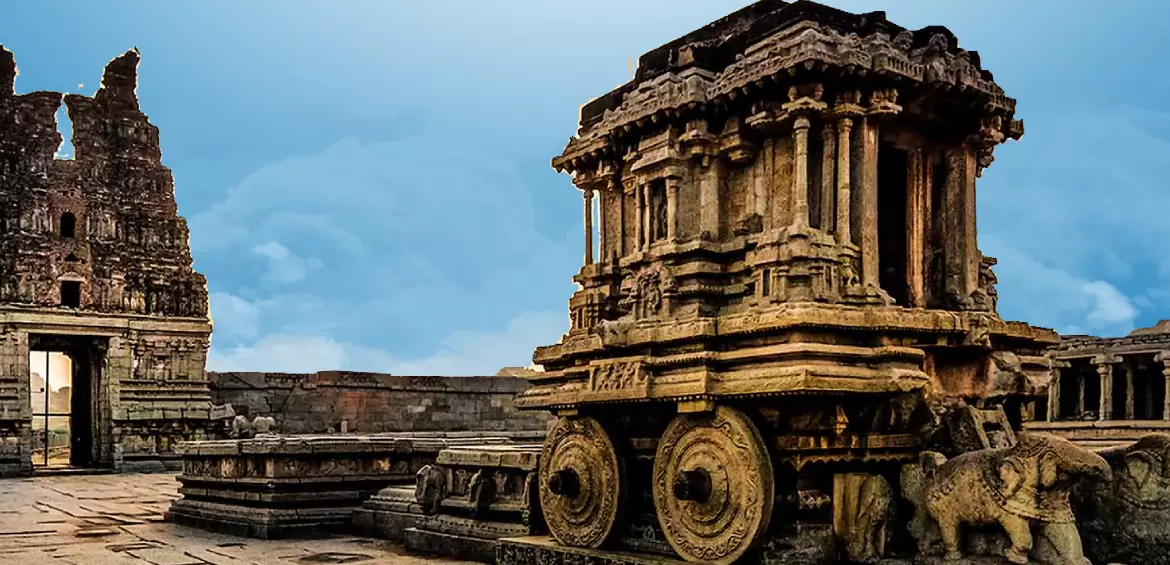
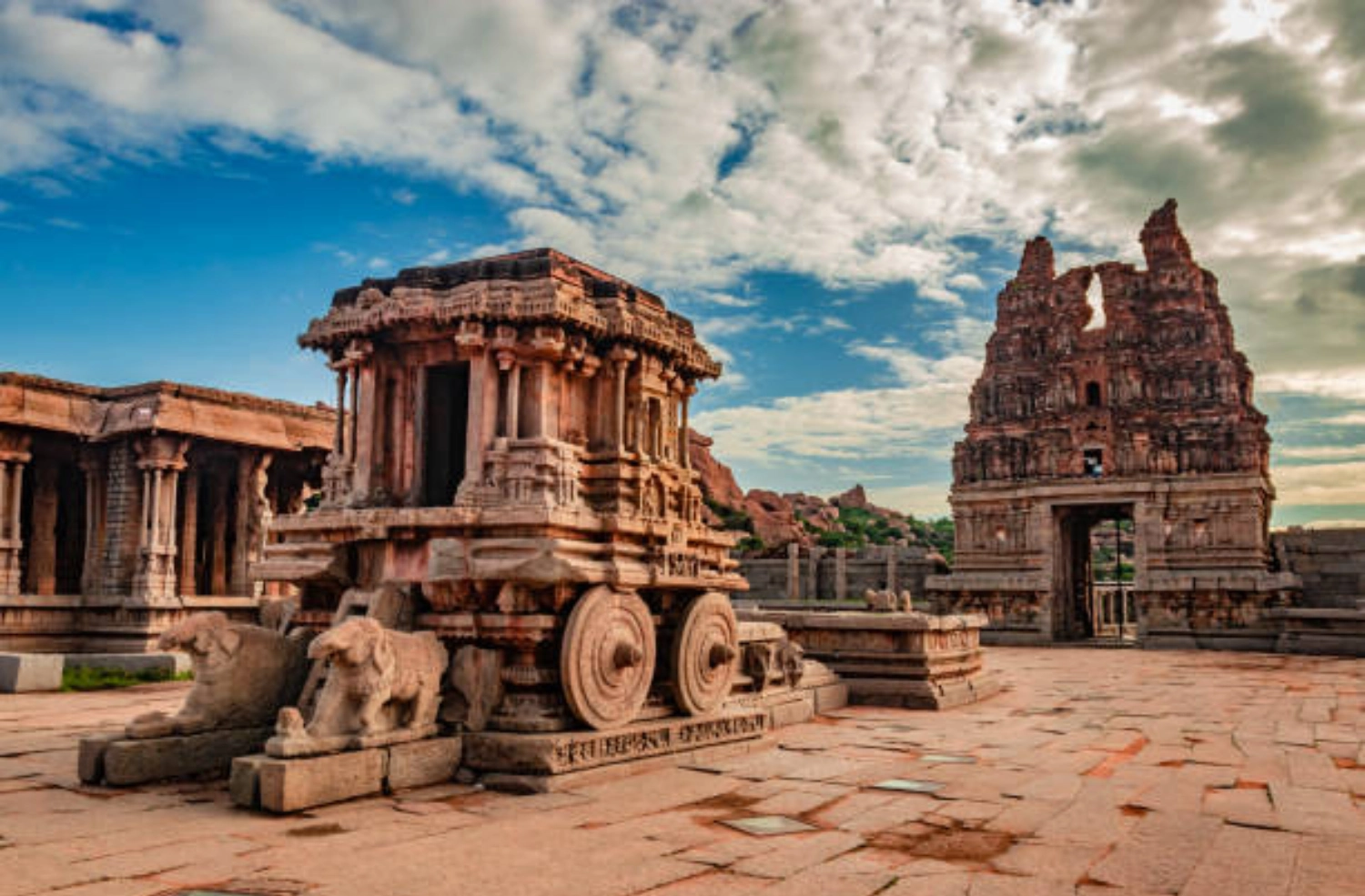
- Architecture: The ruins spread across 4,100+ hectares include temples, palaces, stepwells, bazaars, and fortified walls. Notable monuments include Virupaksha Temple, Vittala Temple with its iconic stone chariot, and Lotus Mahal.
- Decline: After the Battle of Talikota in 1565, Hampi was invaded and plundered by the Deccan Sultanates, leading to its gradual fall into ruin.
- ampi was one of the richest cities in the world during the 14th–16th centuries.
- International traders from Persia, Portugal, and China thronged its bustling bazaars.
- Markets overflowed with precious gems, horses, silk, and spices—so abundant that travelers wrote of diamonds being sold openly on streets like pebbles.
🎨 Cultural & Artistic Richness
- The rulers of Vijayanagara patronized art, music, dance, and literature.
- Monumental temples like Virupaksha Temple and Vittala Temple showcase unmatched Dravidian architecture.
- Intricate carvings, musical pillars, and the iconic Stone Chariot highlight the empire’s refined artistry.
🛡️ Architectural Grandeur
- The city was fortified with massive stone walls, palaces, stepwells, and royal enclosures.
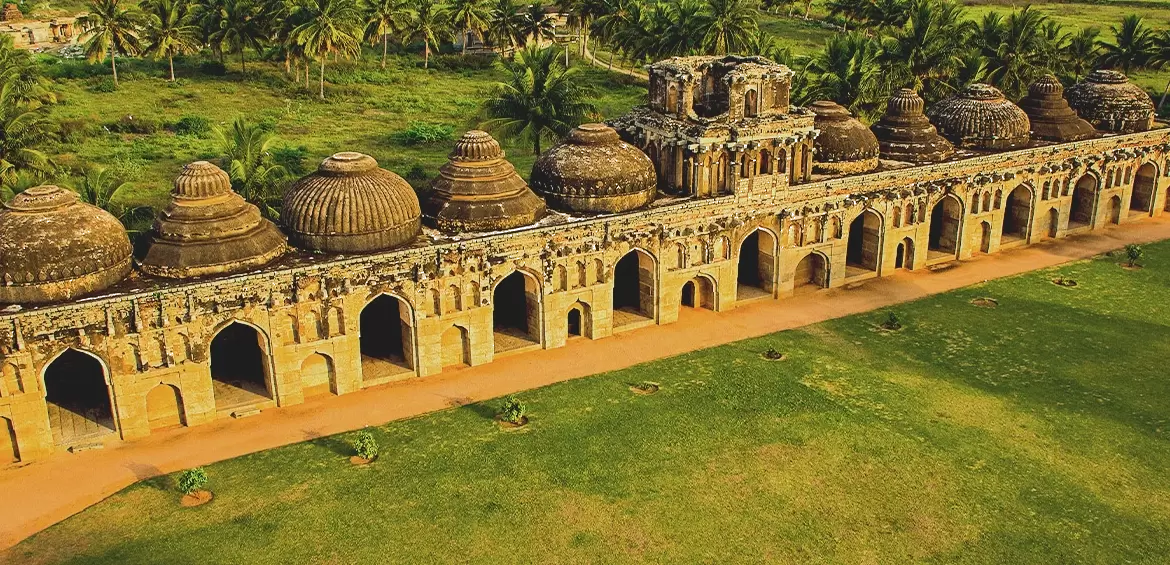
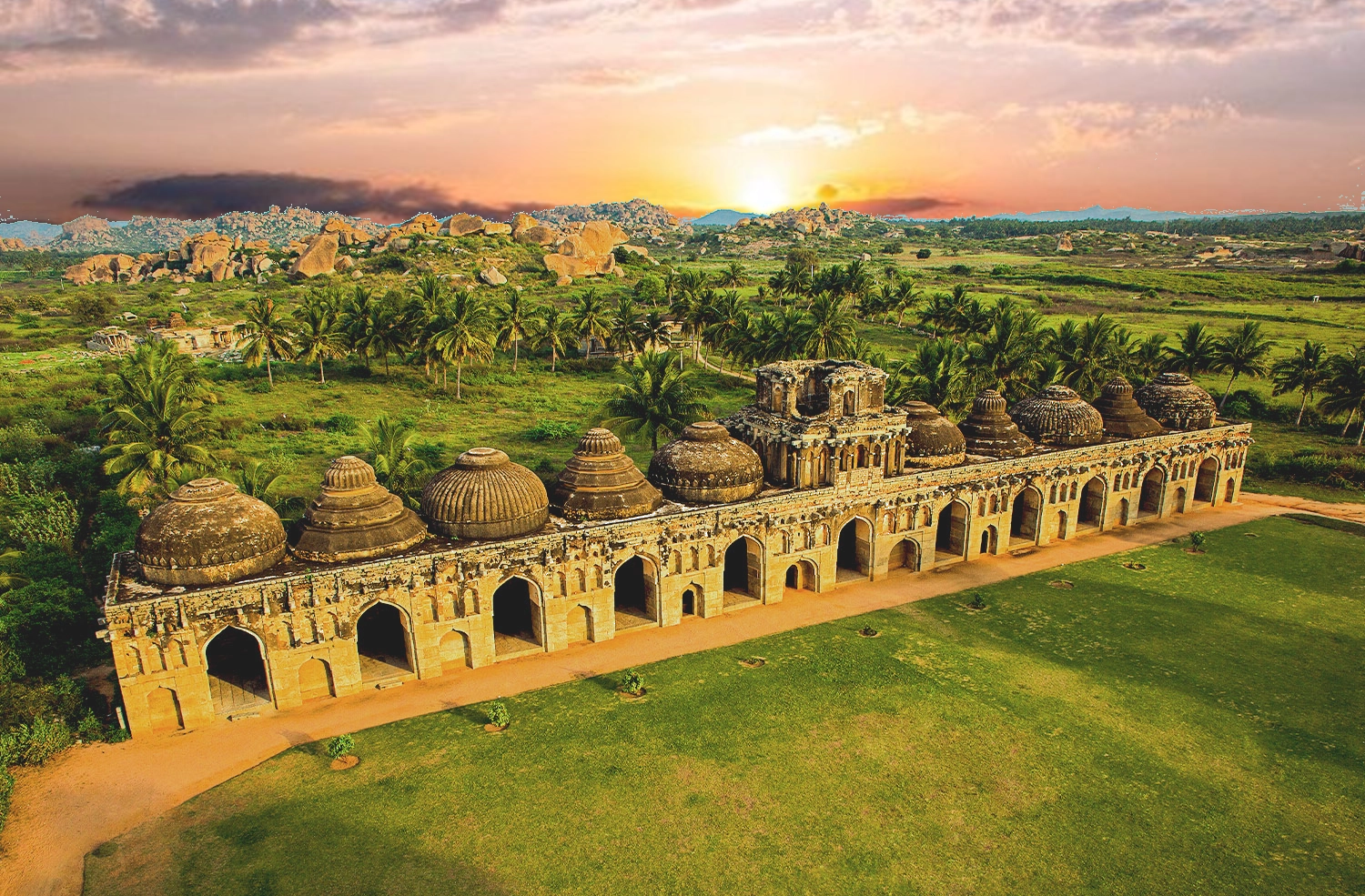
- Structures like the Lotus Mahal and Elephant Stables reflect architectural brilliance blending Hindu and Islamic styles.

✖
![Full Image]()